
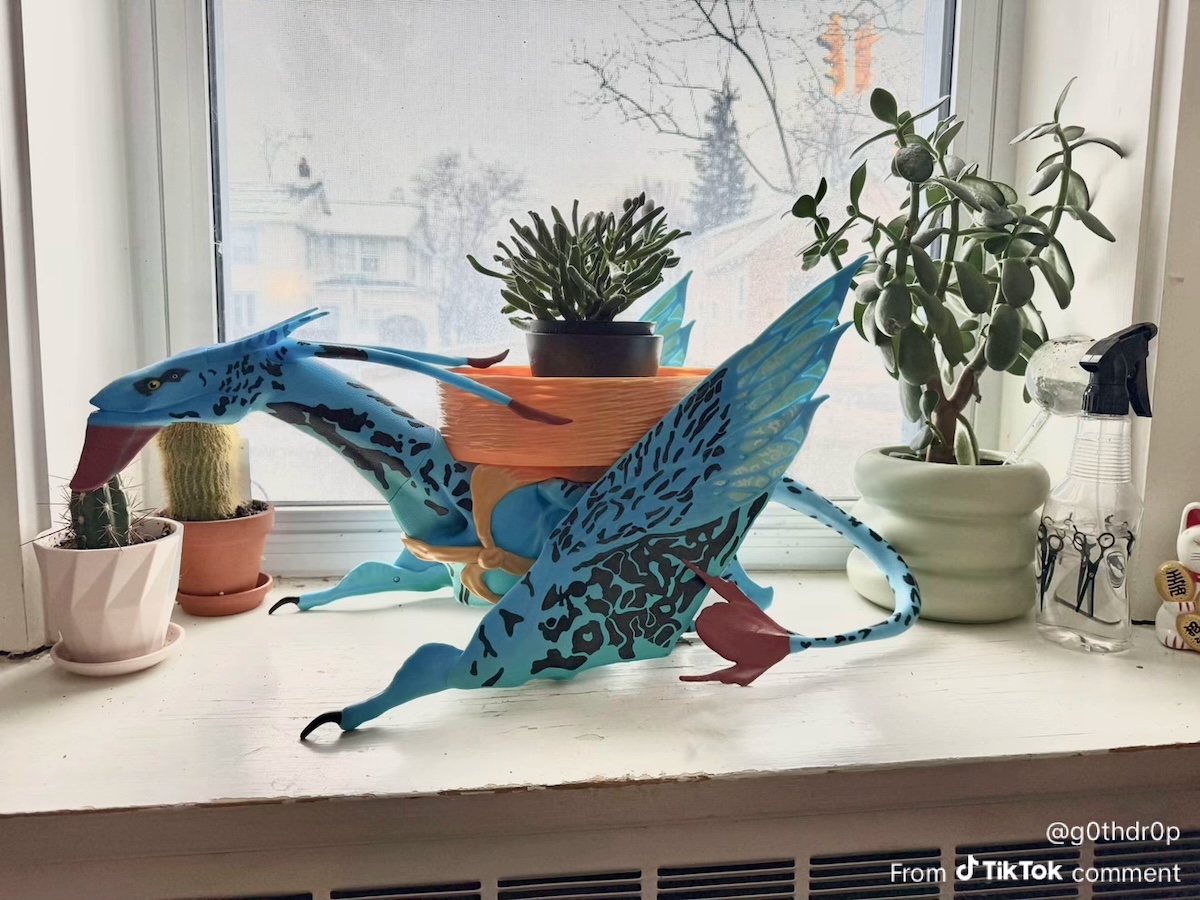
Theatrical moviegoing is dying, haven’t you heard? Some of this dying we predicted, back on the old Mamo! podcast; some of it has come as a complete shock. To wit: the ornamental popcorn buckets.
Lookit, I’m not here to soak anyone’s good time. If novelty buckets are truly your thing (or even, a side-hustle in the content wars), go with god. I used to get one or two of these things back in the day, back when they were just tin buckets instead of paper bags, and they had the Avengers on the side of ’em. It seemed silly to replace something biodegradable with the, uh, opposite of that (see also: blu-ray Steelbooks, which are somehow a more assertive statement on one’s home media tastes than non-biodegradable black plastic). But it was only once in a while. Special occasions. I had a Captain Marvel popcorn bucket, because I loved that movie and I loved going to that movie; and besides, I repurposed it as a flower pot on my balcony for half a decade before it rusted out. I still miss it.
But then, things went too far — novelty popcorn buckets reached their obvious conceptual and thematic end-point but, rather than primly dying and going away, decided to expand into omnipresence like everything in the cancerous tumour that is Late Capitalism must — and now I ask you: is there any better symbol for where mainstream moviegoing is at right now than these monstrous things, and how bad I (continue to) want ’em?
The Avatar: Fire and Ash popcorn bucket — in theatres now — costs $80. It’s a huge hunk of neon-blue plastic shaped like a banshee, albeit a banshee who is half-smirking at you for having spent $80 on him without even feather-testing your genital hair-braid with his genital hair-braid before you did. First moment I saw him, the first thing I thought to myself was, gadzooks, I want that.
But the second thing (really more of a 1.5 thing) was “I’ll use it as a flower pot” and that thought, thankfully, quelled my interest pretty immediately: why, I was instantly forced to wonder, would I want an $80 bright blue dragon-shaped flower pot… and even if I did, where would I put it?
Well, the answer to the first part was: because I was seeing Avatar: Fire and Ash, and I was excited about it. I was down at the Scotiamount to see the movie in High Definition Ache Eff Arr Three Dee, and ol’ Price (from the Mamo! podcast) was with me, and I was sugar-high giddy about the whole thing and thereby — as Cineplex no doubt calculated a year ago — maximally likely to spend $80 on a popcorn bucket that doesn’t even come with popcorn*. Somehow, these buckets have lately become part of the experience, part of the big, “movies are stupid and I only go once a year and I spend a fortune” joy of the thing, which has nothing to do with the movie or the craft of making a movie. To me it all feels more like a New Year’s Eve party that was hard to get into where you don’t know a lot of the other attendees but boy, you’re gonna party extra hard just to show you’re happy to be there. Or, to bring it back to the prime example: I AM HERE TO SEE DUNE AND I AM SO HERE TO SEE DUNE THAT I WILL LITERALLY STICK MY HAND IN A SAND VAGINA EVERY TIME I WANT A HANDFUL OF POPCORN.
*Unresearched, but I’m wondering: if you spend $80 on a popcorn bucket, IMHO, you should basically get free refills on that thing for life, right? I mean, if you have the gumption to bring your blue dragon back to the Cineplex every time you go to the Cineplex, they should have to fill it for free. Right? What difference does it make to them? How many times could a human possibly request 35 cents worth of popcorn refill before they’ve killed the profit margin on an $80 blue dragon popcorn bucket?
Avatar: Fire and Ash is a marker of the moment, too, beyond its bright blue banshee bucket. It’s so goofy that these movies exist. That was my prime thought during most of the new one, which is better than the second one and not as good as the first one but all three, really, are prime examples of goofdom. You’re telling me I’m gonna go to a movie theatre with sunglasses on my face and watch bright blue weirdos dance around on palm fronds and not only will it seem perfectly normal to me, but I will also dutifully, even joyfully, return, anytime Iron Jim chooses to crack open the window to the part of his mind that contains the made-up extraterrestrial fantasyland called Pandora? What??
There’s some writing out there on the internet about how, at least in part, these movies scratch an increasingly-unavailable itch for the majority of the earthbound population, which is to go to a place where nature is still beautiful — overwhelmingly so — and any attempt to suborn it to our dull, human reality through machines and cities is immediately beaten down in a series of asskicking action sequences. It’s like visiting a nature preserve in High Definition Ache Eff Arr, for a lot less (even counting the $80 popcorn bucket) than an airplane ticket, and here you’re home in bed an hour later, dreaming of blue angels and whales wearing bow ties, while your brain builds new neural pathways that make HFR seem like “default normal” and everything else “feel lesser.”
Maybe the medium really is the message on this one: come get another line of space coke, you humdrum-earthbound rubes. Bring your popcorn bucket. Ask them to refill it for free. There was a shot of one of the blue weirdos in the last movie, swimming around in pristine underwater photography where literally no element of the frame has been photographed, and I loved it and it stayed in my brain for the last three years; I went back and looked at it on disc the other day and it’s maybe a couple seconds long at best, where my brain had turned it into a languid, meditative moment in the hallucinogenic musings of the film as a whole. But don’t worry if the shot’s too short: Jim has a solve for that too, and the new movie ends with a callback to that shot, except it’s much longer, and the credits music is playing, and it’s just like… hey… hey… this is pretty good, this made-up blue world. What the fuck are you doing on that grey dustball of yours, anyway? Hey?

I note that it was the first Avatar movie that really set me and Price on our “this industry is cooked” path, being less about the art of making films (which, like most arts we’ve ever had, will probably continue in some form indefinitely) and more about the idea that “going to the movies” was going to remain (if it even was, back then) a central plank of modern popular culture, where tickets were $8 on Tuesdays and most people did it at least a few times a year.
See, the popcorn-bucketification of going to the movies was underway even then, albeit without the eco-catastrophic brainstroke of single-use novelty buckets shaped like sand vaginas or, quite literally, the Destroyer of Worlds. It was in the razzle-dazzle of the place; the desperation with which the whole building got turned into (first) a video game arcade and (then) a Virtual Reality demo floor and (now) a video game arcade again. It was in the simple fact of those 3-D glasses at all; I mean, in the long, sad history of Hollywood learning the wrong lessons from its own success, has there ever been a bigger one than 2010’s “Avatar was successful; we must convert everything into 3-D immediately?” I remember seeing Iron Man 2 in 3-D a couple months later and feeling like I’d been kicked in the gullet. “It’ll get better,” they promised, about all those movies that weren’t ever meant to be seen in 3-D by anyone, for anyone. They tricked us into wearing fucking sunglasses (!!!) at the movies for a decade, and now they wonder why people would rather watch movies at home, on televisions that flow off the Best Buy shelves calibrated to Vivid, with the High Definition Ache Eff Arr already turned on by default. You fucking morons want us to visit a video game arcade to sit in a stinky room to watch a dim digital projector with sunglasses on our faces, when our alternative is a home setup where everything looks like Pandora??!
So anyway, it’s dead: or more accurately, it’s evolved, into that once-a-year, soon once-in-a-lifetime cultural event, where you’ll go to a movie theatre if the movie features Pandora — or the pristine VistaVision photography of a One Battle After Another, or the ingenious, maximalist framing of a Sinners — and your tickets and concessions will cost a couple hundred bucks but who cares, it’s only once a year. And then you’ll go home and turn on Netflix Warner Brothers HBO, and try to figure out where to put this year’s souvenir popcorn bucket. “2025,” the Avatar one should say on the rump. “That was a good year for movies.”
Los Angeles: Fire and Ash
Theatrical moviegoing isn’t the only thing that’s dying, of course. Hollywood — from whence, give or take a continent or two, it came — is dying too. I was reading this piece about the great Los Angeleno Exodus while contemplating my own miserable chances of breaking into the film industry, and it became necessary to have a real moment of reckoning with what has happened, what is happening, and what is (never) going to happen. The piece is more about what happens to the town when one of its main industries goes the way of automaking in Detroit than it is about the local film production’s death spiral, but it’s hard not to read it that way.
Where is it all gonna happen now? Everywhere and nowhere, with emphasis on the latter? At the top I mentioned that we called the death of theatrical fifteen-plus years ago but that some of the particulars have been a surprise; the first half of this decade being jam-packed with industry-obliterating crisis points (a pandemic, a format war, two strikes, the enthusiastic embrace of a technology — A.I. — that Hollywood has spent literal decades warning us all against, etc.) was that. Used to be, I had a reasonable sense of what the business outlook of the industry might be, say, five years from now. Lately I’ve been hesitant to assume any of it’s going to look the same in twelve months.
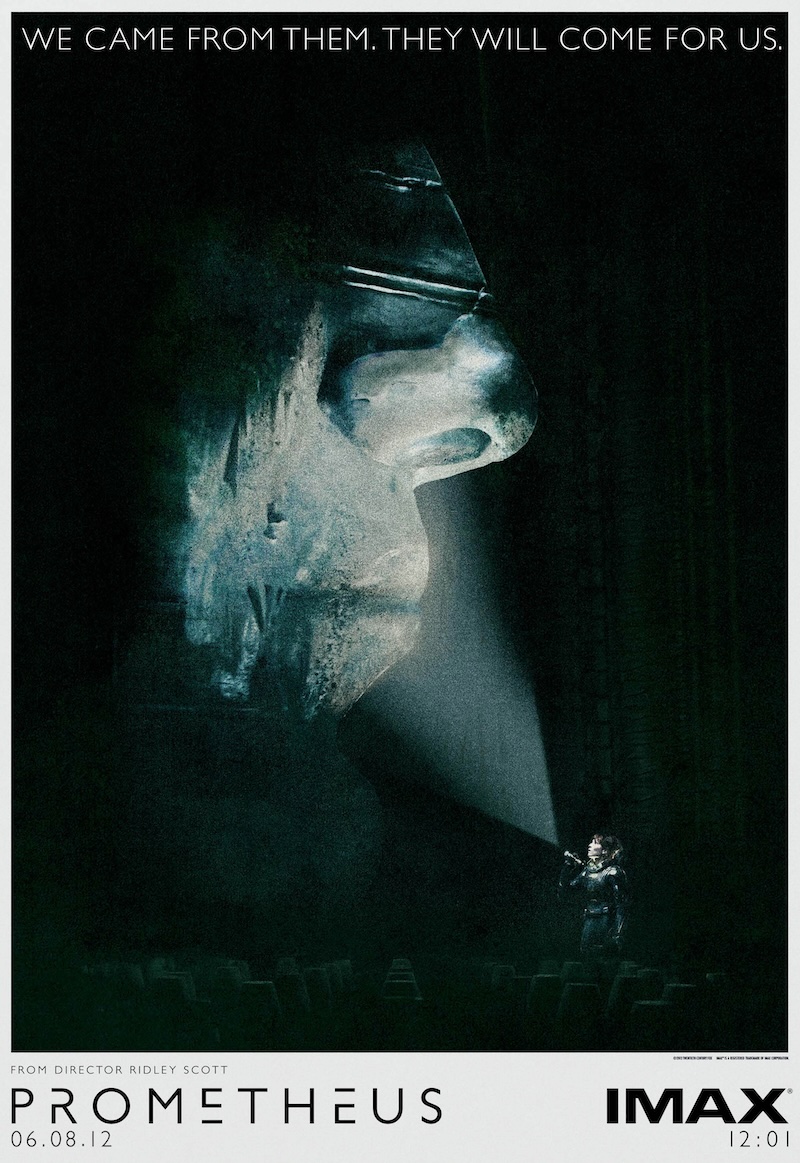
I’ve been working on my samples, which is about all I can do. You don’t have to read this article about David Ellison but I implore you to go look at the key art, an image of a human being so weird I genuinely can’t tell if it’s A.I. or if the human in question just naturally looks like a silicon-based alien species’ best guess at what a person would look like. To me, the whole thing feels like the death rattle in miniature. In Buddhism we speak of the “jealous god realm” as one of the six domains in which one can understand reality. Well, here’s the jealous god who wants to run Hollywood, and he looks like the ivory-nosed extraterrestrial sociopaths in Prometheus. If you don’t remember the text: they’re the ones who made us, and don’t give a fuck about us.
Either way, I have no idea how I’d ever get a job, even locally. I loved this interview on Scriptnotes with the young screenwriters of KPop Demon Hunters, who go through their entire short-form career progression (they’re like 28) and make it all sound absurdly simple; and they do it with the most “this is why everyone hates Gen Z” indifference imaginable. They make it sound so mechanical: go to film school; get management while finishing the program; force/bully the manager to not just send you up for jobs, but all of your friends, too. It’s a fever dream of a film industry that does not, in any experience I’ve ever had, exist — one has to listen to that episode for a very long time to notice that they are studiously, humbly leaving out the fact that they must be really fucking good at this. They speak of how they bashed out a feature script at a diner in less than a week to go pitch on a genre they’d never worked on before (and didn’t particularly want to); and later, in their spare time, they turned it into something that got them a stint at Sundance Labs? Fuuuuuuuuuuuuck.
As with all such things, the pathways in Canada exist, but there are far less of them, and they’re far smaller and harder to reach. (Even the Norman Jewison programs are in “wait and see” mode, as of this writing.) Part of me wonders if Canada can hold its position as a minor exporter of minor shows — the North of Norths and SkyMeds of the world — and not be troubled too much by the collapse of the American film industry (and America along with it). The thing is, we’re not too good at doing our own thing up here; we prefer to be “America, but five years behind,” always. Which probably means we’ll have bigger problems, shortly. Get ready.
Subscribers get to comment
Click this, go there, do that