
Please understand that this is not about Star Wars. I want to make that clear for the folks who might otherwise look at this post and say, “that’s about Star Wars, and I’m not about Star Wars, so that’s not about me.”
I’m talking about the folks who think Star Wars is all one thing — that if they see a Baby Yoda-branded hibachi at the Canadian Tire, it’s probably a good birthday present for someone who has an Andor t-shirt — and that the one thing that is Star Wars is someone else’s thing, not theirs. To those people — to you people — come in. This might interest you anyway.
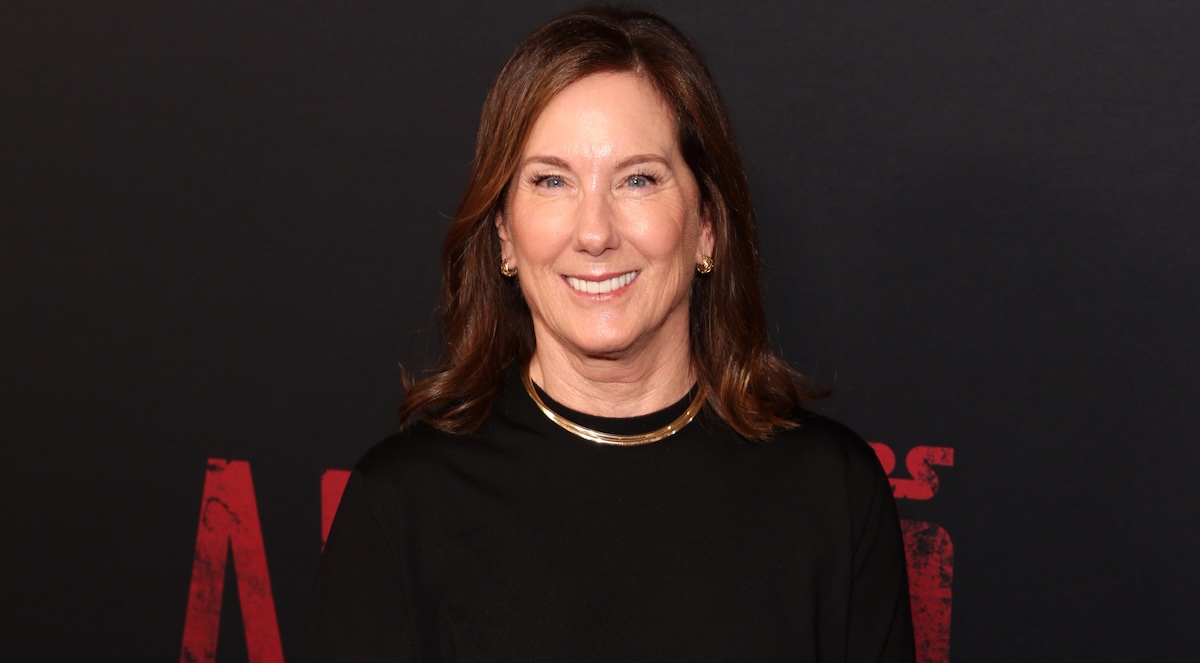
Kathy Kennedy retired this week. Well, not really. She announced that she’s stepping down from her position running Lucasfilm for Disney, which she’s held for 14 years. She says she’ll return to producing, which sounds to me like back when George Lucas did the same and said he was gonna go off and make low-budget experimental art films and instead ended up building a museum. But what do I know. Maybe she’ll do it. Maybe she won’t. That’s not important here.
And this isn’t about her choice of successor(s), a creative guy and a business woman, who will run Lucasfilm going forward and maybe for the rest of my life, who knows. Filoni’s only 2 years older than me, so it’s possible. But who cares.
No. I want to talk about where we are right now — about how bad a studio, which is a kind of company or organization, can be at something. I don’t mean “how bad they can be at making Star Wars” so much as “how bad they can be at being a company or organization.” So bad at it that they basically create out of nothing a reality that is actively disadvantageous to them, in spite of there being no reason for that reality to exist other than that they’re bad at what they’re doing.
You can apply that idea more broadly than to movie studios or Hollywood or Star Wars, I dunno, you do you. I’m not telling you what this analogizes to. But it’s interesting, isn’t it, that this all happened at the same time.
About a year or two into Kathy Kennedy’s tenure running Star Wars, a thing happened that had nothing to do with Star Wars, called Gamergate. I’ve written about it occasionally because I consider it the real moment that the “now” we’re all experiencing got started. Emily St. James wrote about it this week as well, quite cannily I think:
The early seeds of what became our long reactionary nightmare were the various pop culture-driven controversies of the first half of the 2010s, which included a long list of cloistered, irony-poisoned, too-online posters lashing out angrily at a growing sense that the culture had uncentered the voices of straight white men ever so slightly. These controversies began popping up online in the earliest years of the Obama presidency, but they reached their zenith with 2014’s Gamergate, an online harassment campaign that tried to mask its core misogynistic impulses with an idea that was very stupid: Games journalists only liked indie games made by women because they were paid to do so.
Emily even included a link to one of her old pieces back then, where she was trying to do what so many people did and still do with the animating principles of the bad faith class, which is to try to treat them with good faith. The election results can’t be because of racism and misogyny, can they? They must be due economic pressures, right? That sort of thing. We all do it.
Here comes the part that anyone who’s read anything I’ve ever written about Star Wars has already seen coming: I’m thinking about what happened with The Last Jedi.
Because people can — and should — call Gamergate the flashpoint for modern American politics; but I’m a Star Wars girlie, so I will always, always take pains to excavate TLJ as my more favoured contemporary use case. Thinking about Kennedy this week, and reading Emily’s piece, I was also thinking about the narrative that exists around TLJ, unchallenged, to this day.
See, Kennedy talked about The Last Jedi this week, too, in her “exit interview” (good grief) over at Deadline. She claimed that Rian Johnson got scared away from making more Star Wars movies because of the way toxic fans reacted to The Last Jedi — which, if you’re not a Star Wars girlie like me, you might need to know was misogynist, profoundly racist, and involved abusive trolling of women and people of colour that went on for years.
Johnson, as is his wont, was dutifully quick to “lol nope” Kennedy’s claim about his having been scared off. I don’t know Johnson (though he’s always welcome to reach out) but I like to believe he’s telling the truth here: whoever got scared away from making the long-mooted “Rian Johnson trilogy” of new Star Wars movies, it was never Rian Johnson. Kennedy might be lying or she might be undertaking the more human practice of projecting, but if I were to rank those fearful of toxic incels and the fascist far right, I’d put Kennedy herself at #2 Most Fearful, and Disney, meanwhile, at #1.
Now here’s what I think is interesting about this: we can apply the same thought experiment to Last Jedi backlashers that we do to Gamergaters. Here’s Emily again:
We’re far enough past those events now that you can just say, “Yeah, they were just rank bigots.” Yet over the years, I’ve found myself returning to the “ethics in games journalism” complaint, no matter how ridiculous, because it increasingly seems a lot of these folks really believed it on some level. Like, yes, they were misogynist assholes, but they had a strong tendency to believe everybody else was too, and the only reason the world was giving women the time of day was because it was being paid to do so. If you could find the secret money spigot and turn it off, the world would return to its natural order, one where games were made by and for guys, first and foremost.
We come away (I would hope) with clarity on how feckless and inane those “complaints” about the video game industry actually were. Again: the bad faith class, whose arguments were nonetheless treated with good faith by those who interrogated them.
At this point it would be fair to say that no one looks back on Gamergate and says “wow, those bros sure had a point about ethics in video game journalism.” So what sticks in my craw, and is the reason I keep bringing it up, is the fact that the false narrative around The Last Jedi has been wholly adopted and remains adopted even now.
It has been the entertainment media’s favourite data point regarding the entire Star Wars brand, in any report mentioning Lucasfilm since 2017: any instance of Star Wars reporting, including all of the reports about Kennedy’s retirement, will include a line about how Episode VIII was “controversial” or “divisive” in spite of glowing critical response and above-a-billion-dollar box office, which had massive repercussions for the studio.
What’s even more interesting, I think, is the degree to which the bad faith narrative around The Last Jedi has, it seems, driven Disney’s actual creative strategy. Here, I’m connecting dots more than reporting on statements, but look at the net outcomes: a brand turned inward upon itself, retreating to warmed-over reheats of vintage favourites, completely ceding any effort to open the storytelling canvas up to new landscapes and directions, and thereby build new audiences.
Galaxy’s Edge, the Star Wars expansion pack added to two Disney resorts, was designed as an immersive experience that takes place in the “Sequel Trilogy” era of the narrative; as of this week, that design has been abandoned in favour of having Luke Skywalker and Han Solo wander the park shaking hands. The brand’s only post-Last Jedi hit, The Mandalorian — itself a proud pastiche that deploys only existing characters and ideas — will go to the big screens in May (and I’m not bullish on their not dragging Luke Skywalker along with them there, too). A Kylo Ren spinoff was spiked at the highest level of Disney leadership, while Kennedy herself refuses to commit to the idea that Shawn Levy’s Starfighter movie could possibly be a direction forward for continued storytelling, which reads to me like she is preemptively walling the project off, lest any ravenous fanboy incels get too worried about what it means for “the canon.”
And all of this — all of this — reads to me like it’s undergirded by the likelihood that, at some point in 2018 or 2019, Disney leadership seems to have read Variety, taken the reporting about how “divisive” and “controversial” Rian Johnson’s Last Jedi was at its word, and folded up their own pup tent and gone home. Rather than standing behind their own long-term creative project and financial ambitions, they decided to play in the made-up narrative space where if you piss off Star Wars Theory (a popular Canadian YouTube grifter), you lose money.
This is what I mean when I say Disney is bad at this — “this” in this case, I suppose, being the navigation of the modern political reality in which it operates. So bad, in fact, that it has not only gone along with but helped create a reality that is actively disadvantageous to their own business interests. Now, the whole dang country is falling apart, catalyzed nicely by all these “obey in advance” cultural interests — corporate media; popular entertainment — and Disney and other studios will spend a generation fighting their way back uphill to regain some kind of stable footing for their business strategy.
Good luck with all that, I guess.
On a more personal note I’ll return for a moment to what this inward-turning of Star Wars as a storytelling universe means for me, a lifelong fan. This, from my journal, the day of the announcement:
“I guess all my Star Wars is now in the past, which differs from Disney’s new strategy: the future of Star Wars is its past.”
More about the future and the past, and the violence and nihilism of how America currently conceives them, in next week’s post. It’s time to talk about Starfleet Academy.