Those words — perhaps not a new insight — from a recent Culture Study episode, in which Anne Helen Petersen’s guest Austin Frerick was talking about how one of the reasons capitalism needs regulation (my favourite subject!) is that otherwise, the system inevitably unbalances in one direction or the other and thus destroys itself. In this example, regulation is good for the capitalist system, regardless of what the “endless growth” profit barons might think.
(Apropos of nothing, David Zaslav’s “golden parachute” for walking in, destroying Warner Brothers, and walking out, is an estimated $886 million.)
“Life is Goldilocks” applies wider, of course, because there’s a “just right” sweet spot near the middle of any given thing, which we should all be trying to stay well within — whether we’re maintaining the consistency of the offerings at our chicken restaurant menu against the cost efficiency of running that selfsame restaurant; or, I dunno, considering the habitability of the planet we live on.
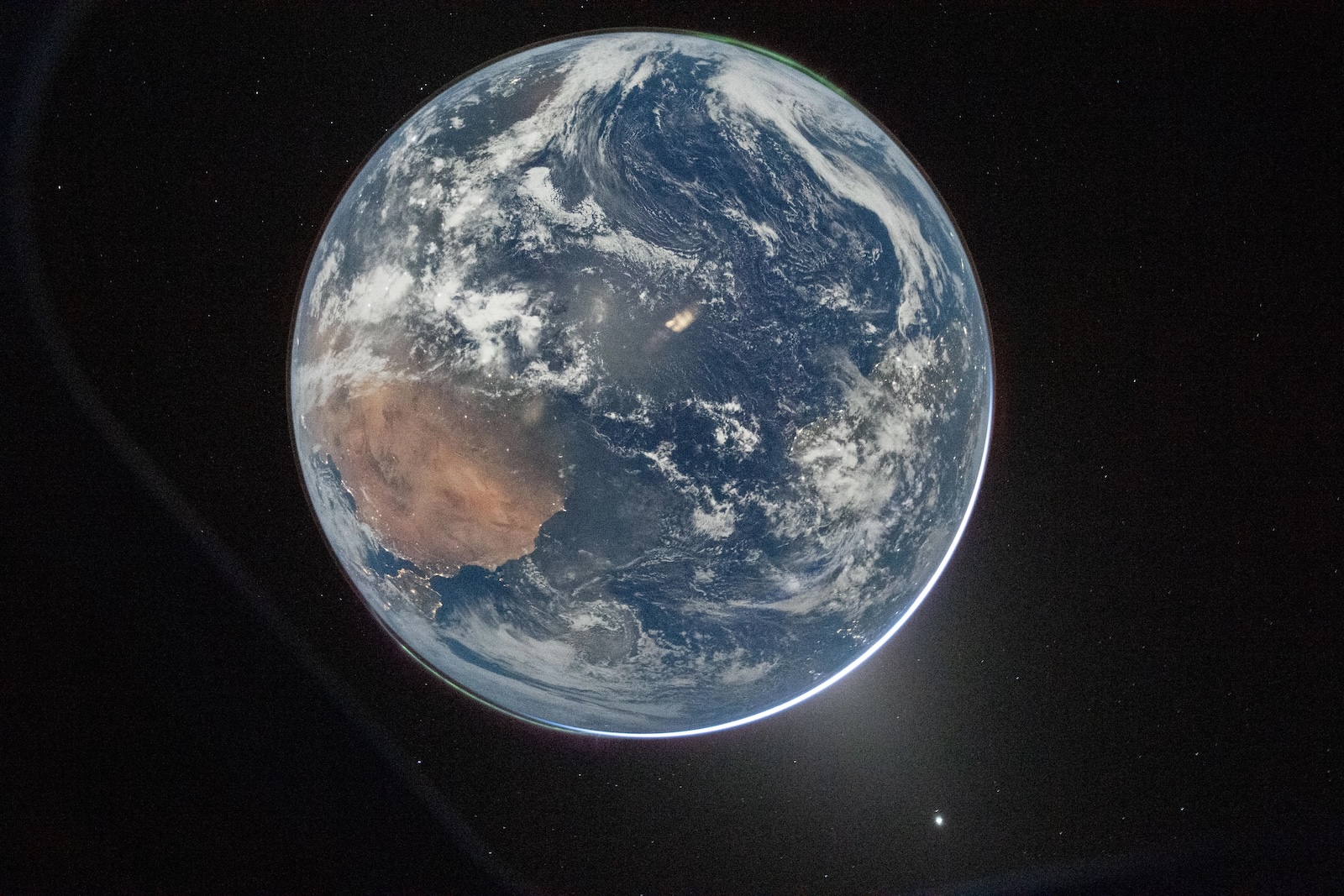
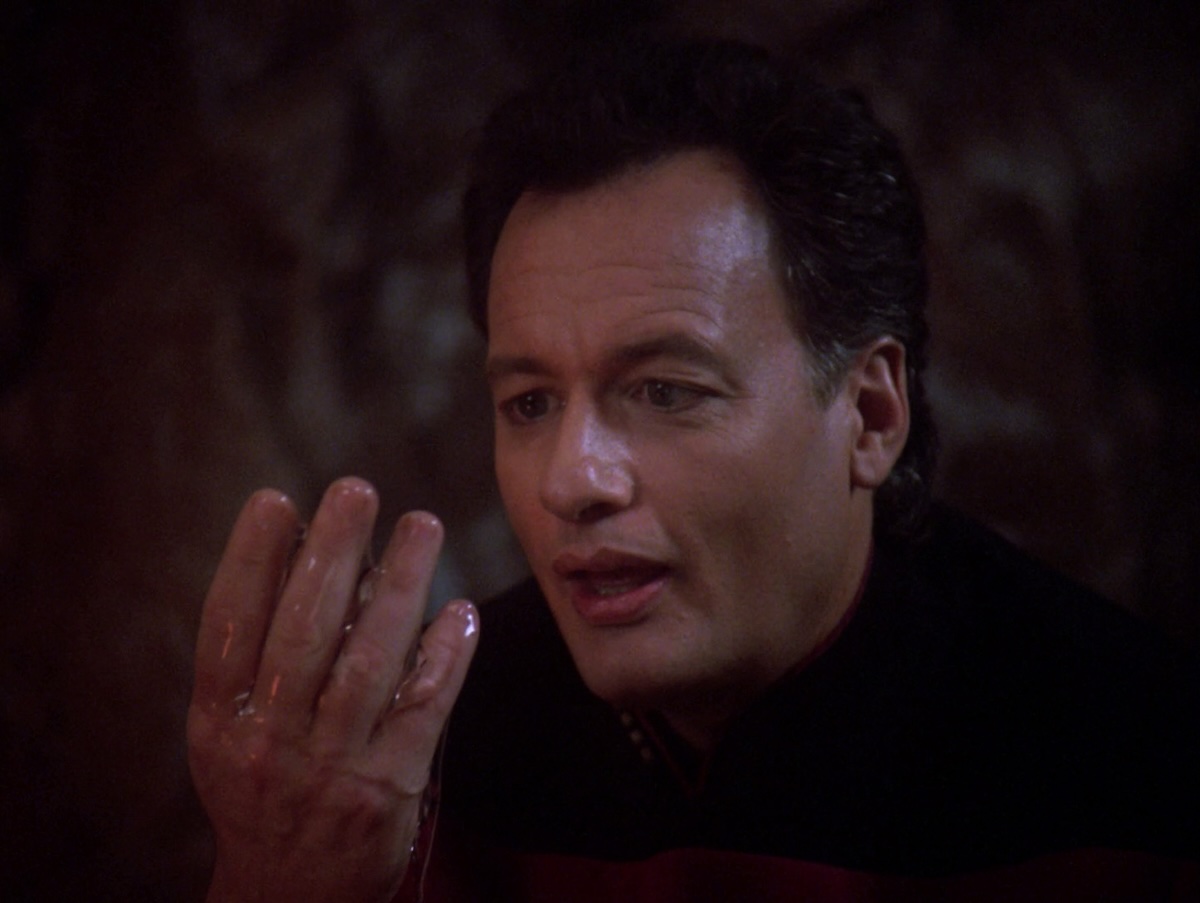
While this post was being written, Artemis II was arcing around the Moon and heading back towards the Earth, and it’s hard not to think about the Goldilocks metaphor, and its eponymous Zone, when you’re looking at new, 21st-century photos of this absurdly gorgeous blue marble upon which literally everything we’ve ever been and ever will be depends. Here we are in our Goldilocks Zone, isolated in a depthless black universe. Not too close to our Sun, not too far either. Neither Venus nor Mars (though I covet journeys both). All the right amounts — although even these are constantly cycling, because we’re in a temporal Goldilocks Zone, too — of heat and light and oxygen and nitrogen and water such that, some number of billions of years ago, as Q put it to Captain Picard, everything started, in a little puddle “of goo.” A precious miracle, which we refuse to cherish.
One of my troubles going through Julia Cameron’s The Artist’s Way in the past few months is its heavy emphasis upon a god concept to support and explain both the mysteries of creative work and (more foolishly, to my eye) a premise that if you just give yourself over to creativity, some supernatural caretaker is going to make sure everything works out okay for You, The Artist. (One assumes this applies to Us, the Species as well, in this argument. Or maybe Julia thinks her god is only looking out for the writers.)
I can kind of get behind the first precept, re: creative work — I wouldn’t analogize it in quite that way; but I also have no need to analogize the provenance of my inner creative voice or even to understand it, because I can see it, understand it, and it works — but the second bit, about someone looking out for us, is just a mean trick Cameron’s playing on her readers. I wonder how many people, over the 30+ years of The Artist’s Way‘s existence, have driven themselves straight onto the rocks of insolvency thanks to her insistence that God will take care of them if they just fling themselves heedlessly into the creative life and never back down.
One of the reasons my atheism is so strong, at least on the subject of whether there is a capital-G God responsible for [gestures broadly] all of this, is that when looking at our pale blue dot in its Goldilocks Zone, I simply find the science more beautiful, more inspiring, more worthy of my unabashed gratitude, than any image of a Big Floating Dudette who’s running the show on/for our behalf. Sure, we can embody our sense of wonder at the miraculous nature of all things in the image of the Big Floating Dudette — but why do that? Why not be more humble beneath the miracle of our Goldilocks Zone and admire it for what it is — that we can see it, understand it, and it works? That feels “closer to the real thing,” to paraphrase the Narnians. In my reading, putting a god character in the story just gets in the way of a deeper, more powerful truth.
As for the provenance of one’s creative voice, well, do as you like. If the bubbling light-fountain from the island on LOST is the image that works for you, go with that one. I, too, believe there are things beneath the ground that aren’t actually there, but whose tremors I can nonetheless hear and feel. Breaking them open would ruin it; ignoring them completely would ruin me. Walking in the Goldilocks Zone, where my only responsibility is to listen, is more than enough for me.
Signal to noise
I’ve written before about my memorable experience watching Star Trek II: The Wrath of Khan for the first time when I was ten or fifteen years old — short version, it was airing on network television, and the signal degraded precipitously in the film’s third act, which happened to coincide with the Enterprise entering the Mutara Nebula and losing its sensor signals, so in-movie technology and movie-watching technology came together in a bizarre act of synchronicity where I could no more see what was going on inside that nebula than the crews of the Enterprise and Reliant could.
And because I taped it, that was my weird, absorbing experience of The Wrath of Khan for years. It was a totally sui generis version of the movie that I was able to visit and revisit; and it pains me, as I’m writing this, to accept that once I had a “clean” copy of the movie (also on VHS) a few years later, I got rid of the taped-off-TV version and all its bonkers, unpredictable, of-the-moment thereness.
I was thinking about that this week, partially because I watched a pristine digital 4K copy of The Wrath of Khan the other day (boy, that is one ugly mother of a movie, for all the other degrees to which it fucking rules), and partially because I read this over on the Criterion site, and was thinking about VHS tapes and their artifacts. Actually: I was also listening to this podcast discussion from 2022 about the creation of the “4K77” versions of the Star Wars trilogy (about which I’ve also written before); and I watched the “4K80” copy of The Empire Strikes Back over the weekend, while this was all fresh in my mind.
In that podcast, the question of artifacts also rises: grain, and scratches, and how film prints aren’t just a way to watch a movie but a record of the movie having been watched; and (per Alex Ross Perry, above) so are VHS tapes, albeit in a different way which I, having been raised in the Home Video ’80s, have always instinctively found kind of ugly, at least until recently. (This is probably why I got rid of the borked version of The Wrath of Khan in light of the “clean” version of The Wrath of Khan, although splitting such hairs at 640p is, in retrospect, hilarious to me.)
For those of us in the home theatre game even marginally, there’s always an interesting philosophical/aesthetic question here: what should a home copy of a movie look like? My preference is always towards “as much like the theatrical experience as possible.” Jim Cameron can mock us all we like for saying he scrubbed too many film artifacts out of his recent releases of True Lies and The Abyss, but when I watch The Abyss, I genuinely don’t want to see a movie that “looks like it was shot yesterday,” because it wasn’t, and to pretend otherwise is strange.
But we also have to acknowledge that there will always be a separation between the home theatre experience and the proper theatrical one, because… uh… well, obviously. You’re at home. It’s not a film print; you’re not surrounded by hundreds of people; the seat is more comfortable; the popcorn sucks. And there’s no life to the element, either: my 4K of The Abyss (or, for that matter, my 4K77 digital copy of Star Wars) will look exactly like that every time I ever watch it, because it is not even attempting to be a facsimile of how I first saw both movies, which was on a movie theatre screen as a physical print ran through a projector, somewhere behind me. The print itself was in a temporal Goldilocks Zone, somewhere between “new” and “unplayable,” and that was part of the record of those moments in time too, one which the keepers of this art form have gone on to dutifully erase. Isn’t that strange, too?
Pitt Sickos
Seems like the last couple of weeks have been when a lot of folks have been noticing simultaneously that a loud minority of people who watch The Pitt are also pretty bad at watching The Pitt. You can pick and choose your source on that; this newsletter’s pretty great because it has so many pullquotes. And yeah: I defy you to get more than 3 quotes down on that page before you’re shaking your head and saying, “these fucking fools.”
A lot of this, of course, is just a mainstream manifestation of the kind of grifter-driven rage-baiting that has been rampant in genre fandoms for years (nay, decades); this is how Canadian con man Niatoos Dadbeh, or the CHUDs who created CinemaSins, make their lucre.
(It is, of course, also a good operating case for something that has just become a general principle of life in the 21st century, which is that the media literacy of the average human being suuuuuuuuucks, particularly in America, where the public education has been systematically dismantled since the ’80s.)
But it’s also startlingly weird to see this kind of fan neurosis sent against The Pitt, mostly because The Pitt is so normcore, and most of these losers would more usually be opining on how “contrary to the text” it is to have people of colour in The Rings of Power, than stepping anywhere near a show that’s set on Planet Earth in the Present Day. It’s as though half of Threads suddenly decided to take issue with the lore on CSI: Miami.
Most of the reason I take any notice of this at all is because, perhaps surprising no one, seeing audiences flatten story in this way — into a series of yes/no, up/down, good/bad binaries, like they’re playing a tabletop RPG where only rolling the dice matters, and none of the actual playing does — drives me absolutely teeth-grindingly crazy.
As I mentioned, the other day I was watching The Empire Strikes Back. For those of you who are blessedly unaware, there has been a longstanding thread of backchatter amongst Star Wars fans about how much time actually passes in this movie — given that Luke trains as a Jedi on the planet Dagobah in what might, chronologically, only be a matter of days (or even hours). It doesn’t really chime with the expansion of Luke’s knowledge that this training implies; it certainly doesn’t chime with the decades of training that Jedi normally require, as (retroactively) established by the Prequel Trilogy.
Anyway, I was watching Empire, and I was thinking about this, and I was thinking about this cut particularly, across which Luke seems to have undergone weeks, if not longer, of training with Yoda:
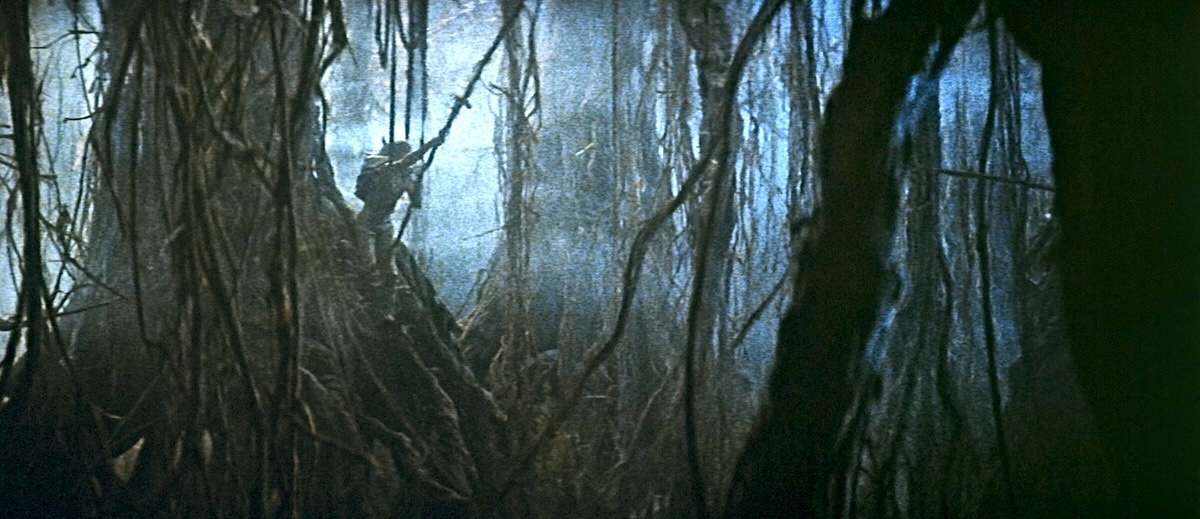
In their prior scene, Yoda accepts Luke as a student; here, Luke is manifestly different physically and in skill than we have ever seen him, even earlier in the same movie. Rationally, the Millennium Falcon might have been hiding out in the cave mouth for weeks rather than hours while all this was going on — the film carefully does not specify how long they are in there — or this could genuinely just be the next day on Dagobah, and Luke could just be this good already at being a Jedi. Which, if he had boobs, would make him a Mary Sue in the aforementioned YouTube grifters’ calculations, but because he has peen, is considered normal.
Here’s what occurred to me this time, though: what if time just moves differently on Dagobah?
There could be a science fiction explanation for such things, of course — planet where time moves differently, Star Trek‘s done it, several times — but what I’m actually getting at is that there doesn’t need to be a science fiction explanation for this at all. The Empire Strikes Back isn’t science fiction; it’s fantasy and fairy tale, so Dagobah could just exist within the sort of fantasy logic that let Lucy Pevensie live an actual lifetime inside Professor Kirke’s wardrobe, before emerging to our world once again as a 7-year-old girl.
To be fair, there’s no textual indication that this kind of fantasy happens in the Star Wars universe. In the years since Empire, in fact, one could reasonably argue that it’s been largely solidified that it doesn’t. Stories teach you how to engage with them, and Star Wars stories have never really pulled out the “it’s Narnia” card in their storytelling rules (except sometimes, they do).
But more broadly — and back to The Pitt — modern audiences seem to have lost the ability to go along with these kinds of ambiguities and uncertainties, even though these exact kinds of ambiguities and uncertainties give us the widest, most mythopoetic image systems with which to better understand ourselves and our world through art. It’s a lot easier, I guess, to make a rant video about how something “doesn’t make sense” (“PLOT HOLE!!”) or “breaks canon,” than it is to engage with what these kinds of uncertainties tell us about ourselves, our lives, and our place within them.
On The Pitt, the doctors are human beings working a shift at their jobs, and while the fact that it’s a television show and not a documentary of course means that there is some artifice and thematic intent to the constructed stories we are watching, the series is also at pains (not always successfully, I’ll allow) to conceal that artifice within the rubric of its own premise.
This season particularly, The Pitt has leaned into the chaotic fragility of the human psyche: Dr. Robby is having a horrible day (year) on the show, and we are realizing in real time that something in how he understands and relates to his life has fully broken him. Worse, he’s not broken in an “awwww, get better, lil’ puppy!” sort of way, but in the realer, far less sympathetic, way that hurt people hurt people: he’s being a total fucking prick to everyone (especially to women and especially especially to women of colour), and losing his shit internally at the same time, all while threatening — more and more explicitly and vocally, episode by episode — to ride off into the sunset and kill himself.
One’s mileage is invited to vary, re: how well this is working for anyone as a weekly television show; but one thing one absolutely cannot do, is say that this kind of messy, complicated, insightful storytelling is a “puzzle to be solved.” Math will not math, here. Binaries need not enter. The Pitt is an attempt at making art about people — here, a man in a mental health crisis — not religious icons. If it’s not working for you, that’s cool, but don’t bring the wrong tools to the discussion.
Mixed
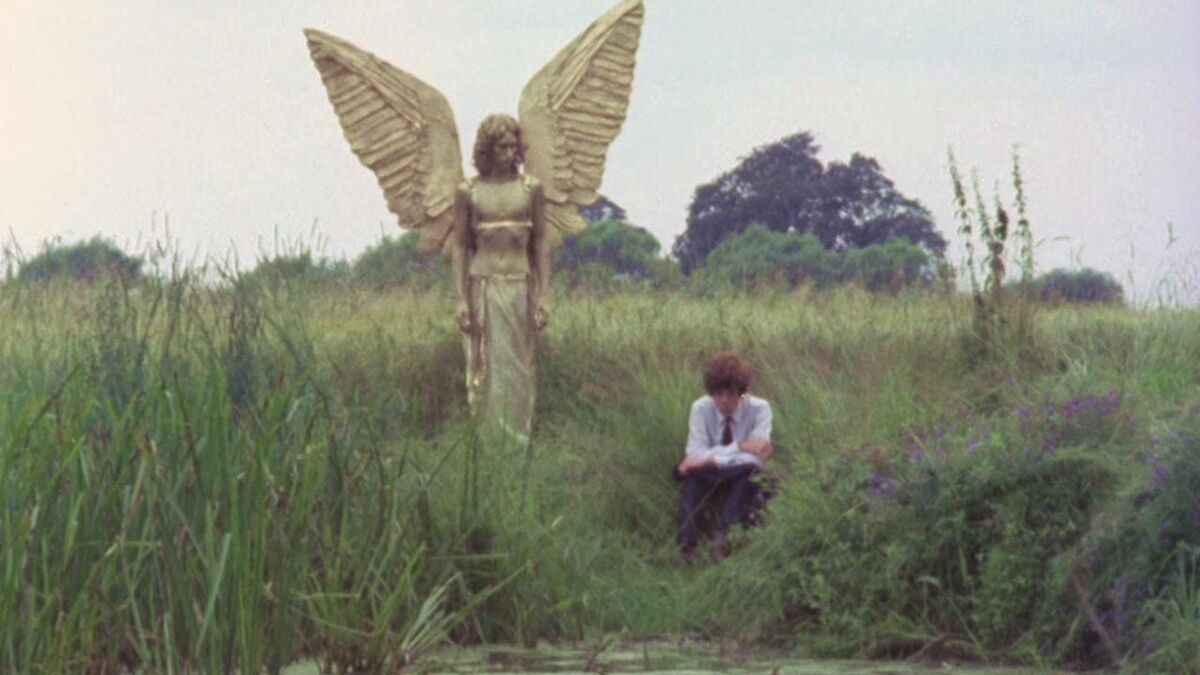
There’s a telefilm I quite like called Penda’s Fen. I was thinking about it above, when I wrote that bit about coveting trips to both Mars and Venus; and again, when I mentioned there being things beneath the ground that I can hear and feel, because one of the characters in Penda’s Fen thinks that’s literally happening in England, and he might be right.
In Penda’s Fen, a queer-coded teen boy named Stephen comes to understand that heteronormativity and pure-bloodedness — both precepts which the film is at pains to link, visually, with the emergence of fascism in groups of young men — are logical traps into which he has fallen; late in the film, he proclaims,
“I am nothing pure, my race is mixed, my sex is mixed, light with darkness!”
Whether or not, of course, there is a King of ancient England waiting beneath the ground to emerge and restore the nation to its pre-Norman roots, is somewhat up to the viewer, and is a question that is more broadly the provenance of most folk horror. When Stephen proclaims his mixed status in Penda’s Fen — neither woman nor man but both — I, bigender baby that I am, felt him deeply.
I wonder then if my creative instinct, my own Goldilocks Zone, lies similarly mixed. Regardless, it is the image of it — and the ambiguity of same — that feels like the miracle to me. I don’t need a logic model to understand it, and would never seek to find one. Better to say that I can smell the earth. I can feel her shaking beneath me.